An excerpt from a new book about Bowie and his search for life, death, and God
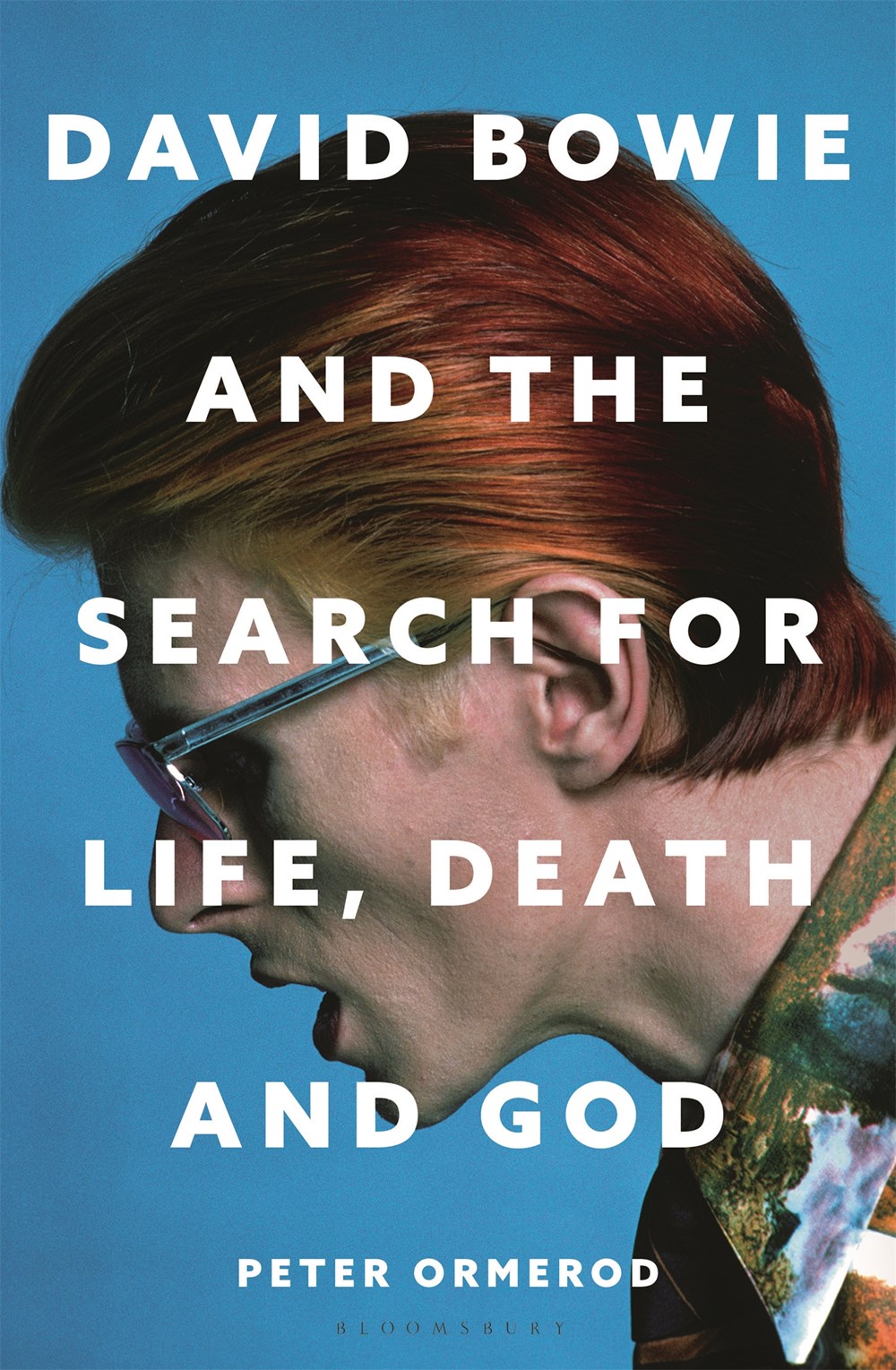
From Peter Ormerod's David Bowie and the Search for Life, Death and God:
While working on his new music, Bowie was also working on the realization of a lifetime's dream: a piece of musical theatre. His collaboration with Michael Cunningham had fizzled out, but Bowie persevered. He got in touch with Enda Walsh, an Irishman whose plays and musicals, including Disco Pigs, Penelope and Once, had by then received countless awards. The result of their efforts was arguably as significant as any of Bowie's other last works: put it together with the touring exhibition and you have a kind of multimedia autobiography.
Agape was still very much on Bowie's mind during his discussions with Walsh. “There was a lot of talk about the beauty of unconditional love,' Walsh recalled. Elsewhere, Walsh said, 'We looked a lot at stained-glass windows, how a story is told with a central image. How it's all broken and shattered.'
After the false start with Cunningham, Bowie's work with Walsh was showing potential. So in 2014 Bowie asked Ivo van Hove, one of the most decorated theatre directors in Europe, to help take it to the stage. From Bowie's earlier concept, two elements survived: Thomas Jerome Newton, his character from The Man Who Fell to Earth, and the poet Emma Lazarus, who was beginning to elide with the resurrected biblical figure. But details remained scarce. 'There should be a killer in it, there should be a girl in it,' was all he told van Hove.
Bowie, Walsh and van Hove met in New York in 2014, along with Corinne 'Coco' Schwab, Bowie's personal assistant and confidante since the mid-1970s. Bowie and Walsh read the script to van Hove, interspersed with songs played on CD. Van Hove thought something was missing, and told Bowie that he needed to write 'the one song in the beginning. We need to know who that guy is. And we need a song that establishes the character within three or four minutes.' So Bowie wrote the song and recorded a demo. The song was called 'Lazarus'.
'It sounded like an immediate Bowie classic, even in a demo version,' said van Hove. 'And I knew: now we have a show. Now we know who the guy is, what he's longing for, what his issue is. It's mysterious at the same time. It's everything.'