Patti Smith, Simone Weil, music, and Arthur Rimbaud
Always do what will cost you the most.
Simone Weil said that.
Weil walked the walk.
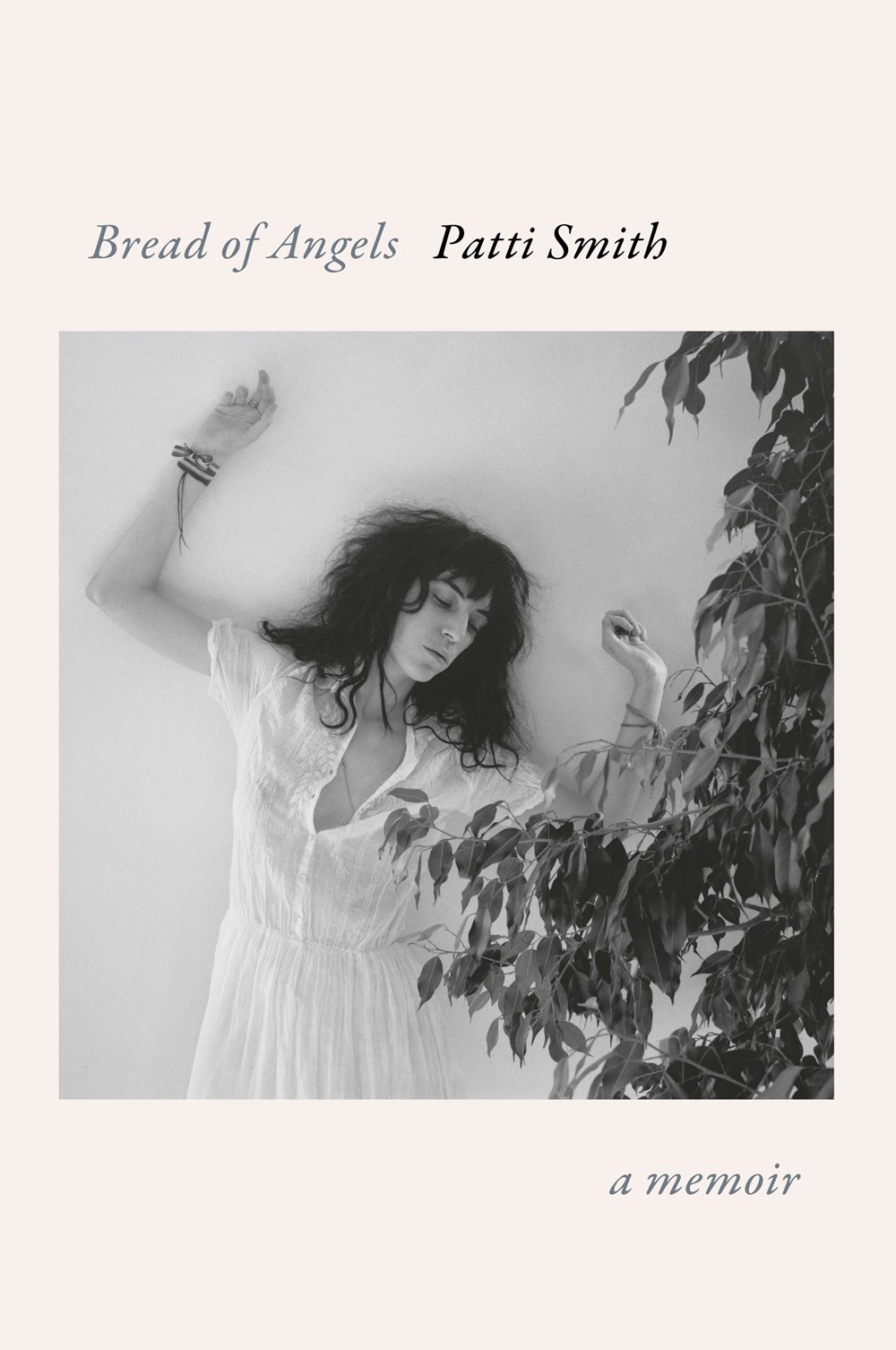
I recently finished Patti Smith's Bread of Angels, a memoir.
Weil was convinced that the criteria for entering a war were vastly different, and more intense than for individuals who could make their own decisions. As a Frenchwoman, Weil therefore fully rejected the idea of involvement let alone the deployment of the army in Spain. As the moral being that she was, however, there was no alternative for her but to fight. Just as there are people who refuse military service for reasons of conscience or belief, and who are instead willing to accept any sanction and any sacrifice, for Simone Weil in the summer of 1936, it was indispensable for moral reasons to fight for the Republic and thus accept any sacrifice that needed to be made.
The quote is from Wolfram Eilenberger's The Visionaries: Arendt, Beauvoir, Rand, Weil, and the Power of Philosophy in Dark Times, a great book (although I loathe many of Rand's theories, there are good points in having her appear in the book).
I listen to Shye Ben Tzur, Jonny Greenwood, and The Rajasthan Express' album Ranjha, a new and fairly loud album. It's hypnotic, mystic in a way that makes me recall the great Nusrat Fateh Ali Khan.
Half conscious, I felt something weighty placed on my chest. I was too weak to open my eyes but felt the object with my hand. It was a box set containing a recording of Madama Butterfly, with the libretto in English and Italian. I could not even respond. She said I could listen to it anytime I wanted, but not until I was well. Then she reached for it, but I didn’t want to let it go and she let me hold it awhile longer. In the days and nights that followed, the wish to escape my body was only surpassed by a yearning to listen to the music of Puccini. There was no amount of penicillin or prayer more effective than my mother’s loving proviso. She placed the box atop the dresser so I could see it. I would drift in and out, yet another pounding migraine, but could also feel myself getting stronger, healing cells multiplying. I drank water, ate my Jell-O and slept. The sight of the box with a delicate sketch of Butterfly in her headdress and kimono spurred me on. When I recovered, I was finally able to hear the aria Un bel di Vedremo, once again transported by a voice that seemed a celestial messenger. There were three discs inside, each one with a winged cherub on the Angel label. I labored over the difficult libretto, but in truth I didn’t need to know the words of the aria. My mother had emptied the tip jar, no doubt sacrificing much. I remember all of this. My fiery desire to hear the music of Puccini coupled with my mother’s deep understanding of how she could reach me through the barriers of a relentlessly burning fever. The wedding of art and sacrifice. That is how I returned to the world.
Back to Patti Smith.
Smith recalls a scene from when she was a young child. Puccini's Madam Butterfly features this aria in the second act.
I'm reminded of Maria Callas's rendition of Bellini's Norma, a tragedy where Callas excels.
The great Maria Callas performs an aria from her signature role, Bellini's druid priestess Norma, with the Orchestre de l'Opera National de Paris and Georges Sebastian. Recorded live at the Palais Garnier on the 19th of December 1958, this concert marked the soprano's debut at the Paris Opera [...]
The consciously tepid strings and fluctuations of the same in contrast with Callas's voice is sublime, reaches a beyond that I can't describe. I'm struck by the simplicity and extraordinary brilliance of the aria. It sends me to a lull yet awakens myself with the bass strings, Callas's singular voice, the orchestral rise and fall à la a tide.
I've loved Rimbaud since I was a teenager. I stumbled across him at a local library. He opened my mind and showed me that I was not alone in some senses.
Again, from Smith's book:
On Saturday mornings I modeled at the Philadelphia Academy in exchange for drawing lessons. There was a 99-cent bookstall across from the bus station. I inspected it as usual and was drawn to the face of the young poet on the cover of Illuminations. Within a moment’s reading I was as beguiled by his words as his insolent beauty. Not having a dollar, nor willing to part with it, I slid Illuminations in my pocket, a crime I did not regret. Although his work was somewhat impenetrable it offered a new poetic language. I searched the library for something of him and found the words that called to me, would call forth from me, fixed and ephemeral, A Season in Hell, my furious guidebook.
A Season in Hell is as much ignoble confession as poetry, Rimbaud concedes his seemingly supernatural power over language while displaying a vehement self-loathing. You’ll always be a hyena, he writes, tearing himself in two, wrestling with the civil war of his personality. I recognized a relatable duality, the demonic hand in hand with the charitable. I was struck that he was barely nineteen, his suffering sealed within the pages of a book. I wanted to believe that his confession released him from his turmoil, and I sought to follow him down his shattering spiritual path.
It is beauty and Hell and the inner self in its sides, like an apeirogon.
#music #MusicTips #PattiSmith #ArthurRimbaud #SimoneWeil #MariaCallas #opera #Puccini