David Lynch – fix your hearts or die, via Scott Meslow
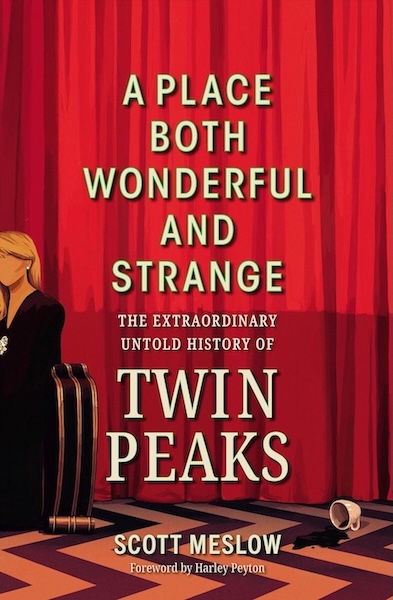
From Scott Meslow's brilliant new book A Place Both Wonderful and Strange: The Extraordinary Untold History of Twin Peaks, here is a wonderfully told story about Denise Bryson, the trans person played by David Duchovny in Twin Peaks.
Note: the passages below contain certain spoilers.
Denise Bryson’s reputation precedes her. When Cooper learns that Bryson, his former partner in an Oakland drug bust, has been brought in as the DEA’s point person on the missing cocaine he’s accused of stealing, he’s delighted. Denise is “one of the finest minds in the DEA,” says Cooper. “Harry, we’re in very good hands.” But when Denise walks into the room, Cooper hardly recognizes her. When they’d worked together in Oakland, Denise—a trans woman—had not yet transitioned. Cooper, caught off-guard, calls her by her deadname. “It’s a long story, but actually, I prefer Denise, if you don’t mind,” says Denise, smiling. And to Twin Peaks’ eternal credit, Cooper’s response is, “Okay.” It would be inaccurate to say that Twin Peaks nailed trans representation when Denise was introduced in 1990, though its small-town characters are believably awkward in what you must assume is their first encounter with a trans person. In the scene that follows, Hawk declines to shake Denise’s outstretched hand, and Truman makes a crack under his breath about how the Great Northern, where Denise is staying, is in for a real surprise. But Cooper—recognized by then, by the audience, as the show’s paragon of moral rightness—is unquestioningly accepting of Denise’s identity. She hasn’t been in the room for thirty seconds before they’ve moved on to more important business: the particulars of Cooper’s drug case and the high quality of breakfast at the Great Northern.
To hear Duchovny tell it, he only landed the role because another, more famous actor turned it down. “I believe that my part was inspired by James Spader and written for him,” said Duchovny. “He wasn’t able to do it, and I was looking for any job I could get. It wasn’t like, ‘Gee, I’m a fan of Twin Peaks.’” Casting director Johanna Ray recalls multiple men arriving in drag for their audition to play Denise. Duchovny didn’t go that far, but he acknowledges his first attempt to play Denise was more over-the-top. “I must have auditioned much more stereotypically effeminate, and then when I put on the makeup and everything, it became clear to me that less was more,” he said.
After that initial introduction at the Sheriff’s Department, Twin Peaks largely does right by Denise. She explains that she realized she was a woman during an undercover investigation, when she discovered she felt more at home in women’s clothing. There’s a quick, heartfelt moment when Cooper—in the midst of a heated conversation about the investigation—accidentally deadnames her. Denise quickly corrects him; he apologizes, she says it’s okay, and they both move on. But even as the show acknowledges her transness, Denise is equally defined, as Cooper told Harry and Hawk, by her intelligence as a law enforcement agent. She sees through the unconvincing attempt to frame Cooper immediately, and masterminds the sting that leads to the downfall of Jean Renault. This leads to a sequence in which Denise appears in drag as a man. “You can call me Dennis,” she says, walking into the room dressed as a stereotypical businessman—not because of any social pressure, but because it’s a role she thinks might be useful in infiltrating Renault’s camp. Still, it’s Denise being a woman that saves the day; wearing the uniform of a Double R Diner waitress, Denise holds Renault’s attention just long enough to pass a gun to Cooper.
Denise appears for just one scene in Twin Peaks: The Return, but it’s one of the show’s most memorable—so much so that it’s routinely quoted by people who haven’t seen a frame of Twin Peaks. When Gordon Cole announces his intention to launch an investigation in Buckhorn, South Dakota, he needs to clear it with his superior officer: Denise Bryson, who has climbed the ladder to become the FBI’s chief of staff. It’s in this scene that Gordon Cole, played by Lynch himself, gets the last word on Denise—one that was almost instantly adopted as a rallying cry by the LGBTQ+ community and its supporters. “When you became Denise, I told all your colleagues, those clown comics, to fix their hearts or die,” says Gordon. “I said, ‘We’ve got to bring [Denise] back. And I think she’s the head of the FBI,’” says Mark Frost. “But I’ll give David the credit. He came up with ‘Fix your hearts or die.’ I’ve seen people carrying that poster at protests over the last few months. There are probably hundreds of tattoos.”