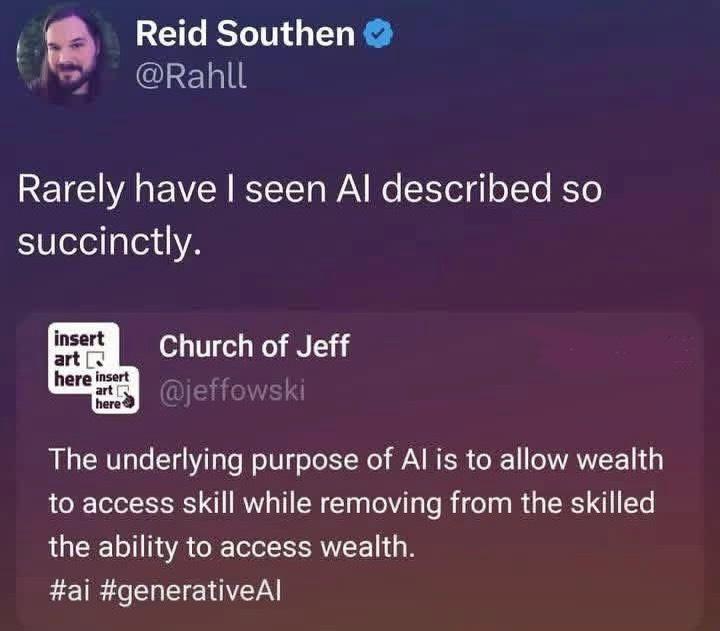
Niklas's thoughts

ArtificialIntelligence

spacex

Andreas Cervenka is my favourite economy journalist. He's written books. I've written about his Greedy Sweden. Another one of his books is named 'What does a bank do?' (my translation of the original title in Swedish).

That's actually a great example of Cervenka's greatness. Just like Noam Chomsky, Cervenka is brilliant at simply explaining complex and complicated subjects.

For example, he taught me that if I get a hold of 25 million USD, I can get a license to start my own bank. Once I do that in Sweden, I can start creating my own money.

Yes, you read that correctly.

You can create your own money. And that's not only how banks work in Sweden. The basic scheme is the same all over the world.

But that's not the only way to make money.

Cervenka recently had an article published in Aftonbladet magazine: Är SpaceX peak crazy?. In short, I think most of the article spells two things:

  1. How money easily is valued in very illusory ways
  2. The coming burst of the AI bubble will make the global financial crisis of 2008 to seem like a case of the sniffles (in some ways)

OK, here come quotes, translated by yours truly:

Friday afternoon, Swedish time, the space company SpaceX makes its debut on the Nasdaq stock exchange in New York.

It is one of the most hyped listings ever and by far the largest.

In total, SpaceX is selling new shares for 75 billion dollars, 712 billion Swedish kronor. The second largest listing was when Saudi Arabia's state-owned oil company Saudi Aramco went public in 2019. That time, the company raised 29 billion dollars.

Investing in stocks should normally be something that is primarily done with a calculator in hand. But anyone buying shares in SpaceX must, above all, use their imagination.

The price of 135 dollars per share means that SpaceX's market value lands at 1,770 billion dollars (just under 17,000 billion kronor) or almost 95 times last year's revenue.

***

As recently as March 2020, SpaceX was valued at 34 billion dollars. The growth in value since then makes the company's own rockets look like moisture-damaged firecrackers.

It is also a valuation that defies gravity. Recently, AI competitor Alphabet raised a total of 85 billion dollars from investors through a new share issue, a record for a company already on the stock exchange.

Alphabet is valued at around ten times its sales.

***

But then again, selling dreams is also something of Elon Musk's superpower. It has been a long time since the valuation of Tesla, with a market cap of 11,000 billion, was about cars. It is based almost entirely on Elon Musk's promises of robots and self-driving taxis.

***

Even those who do not believe in the visions will be involuntarily drawn into the dream, as SpaceX becomes large enough to end up in the portfolios of all funds and pension managers around the world that track indexes. Millions of people will thereby become shareholders in the company.

***

The question, of course, is what happens next. Just in the last few days, there has been more nervousness around AI stocks. Companies are worrying about the high costs of letting their employees use AI without restrictions. There have also been several studies suggesting that AI investments have not yet generated as much new revenue as expected.

And the Wall Street Journal reported on Thursday that OpenAI plans to lower its price to compete with Anthropic. Price wars are usually not very good for profitability.

***

Perhaps all the visions will come true and SpaceX will be the starting point for a new era of humanity.

But it could very well turn out that we look back on 2025 and 2026 as a crazy time when many lost their footing. Something to laugh harshly at in hindsight.

“Do you remember the SpaceX prospectus? Elon Musk was going to get a 1,200 billion bonus if he put a million people on Mars”.

#SpaceX #ElonMusk #capitalism #ArtificialIntelligence #AI

mann

It's interesting to read about Stefan Zweig. He deeply influenced Wes Anderson as the later wrote The Grand Budapest Hotel-

I thought about the film as I started reading The Magic Mountain by Thomas Mann. I found the book when I read Sarah Bakewell's additions to the recent 100 best novels of all time list that The Guardian collated. The list was gathered by results from asking critics and authors of their best novels. This past weekend, the Guardian released the 100 best novels all-time list as gathered by readers. The Magic Mountain is #42 on the author list, #50 on the reader list.

The book sucked me in even when I felt guarded against just that. Fuck me. So far I've read 14%. Mann's greatness is obvious even just ten pages into the book. The book seems to often be described as 'philosophical'. There are plenty of philosophical concepts in the book, but those are in the eyes of the beholder; Mann simply holds up a mirror to the human.

måwe

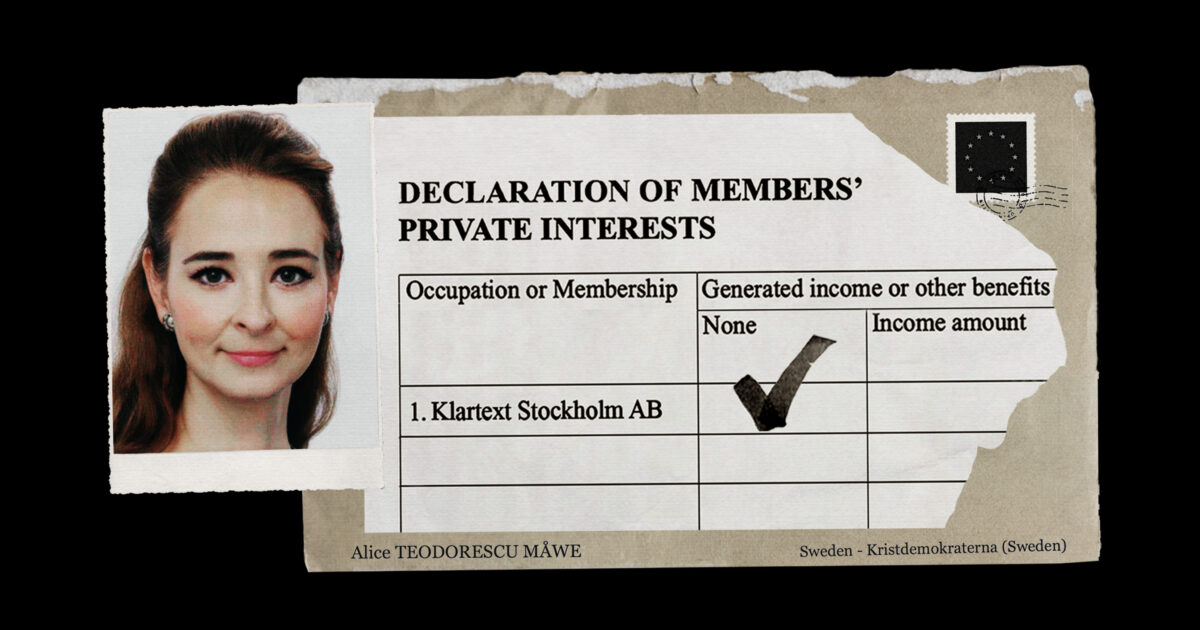
About Sweden, I've read about how Swedish 'christian democrat' Alice Theodorescu Måwe has accepted around 100,000 USD as a 'side income' which she failed to report. Lobbyists are going to lobby. In other Tidö-party-related news, the extremist right-wing xenophobic, homophobic, and anti-pedophile party Sverigedemokraterna had a government representative leave the party due to child-pornography charges. Don't get me wrong: sexual disorder doesn't care about political-party affiliations. It's just astonishing to see how Sverigedemokraterna treat their own once they've done something 'wrong'; see how William Petzäll was driven to his death.

Swedish TV have a humour show on. A guest star in an episode is Nick Alinia, a conspiracy-theorist nazi sympathiser. Nice. Contestants have chosen to leave the show.

cia

This weekend, I learned that the CIA used 'vampires' to fight communism in the Philippines. They've done worse, apart from some things.

momperry

I really like Spatial, No Problem. by Mouse on Mars and Lee “Scratch” Perry. Of course, Perry is dead, but he recorded so much with so many people that I think and hope it will take decades until the well runs dry. The album is wondrous. I love the playful lyrics, not least the ones made with Bob Marley and the ones against Chris “Vampire” Blackwell.

graph

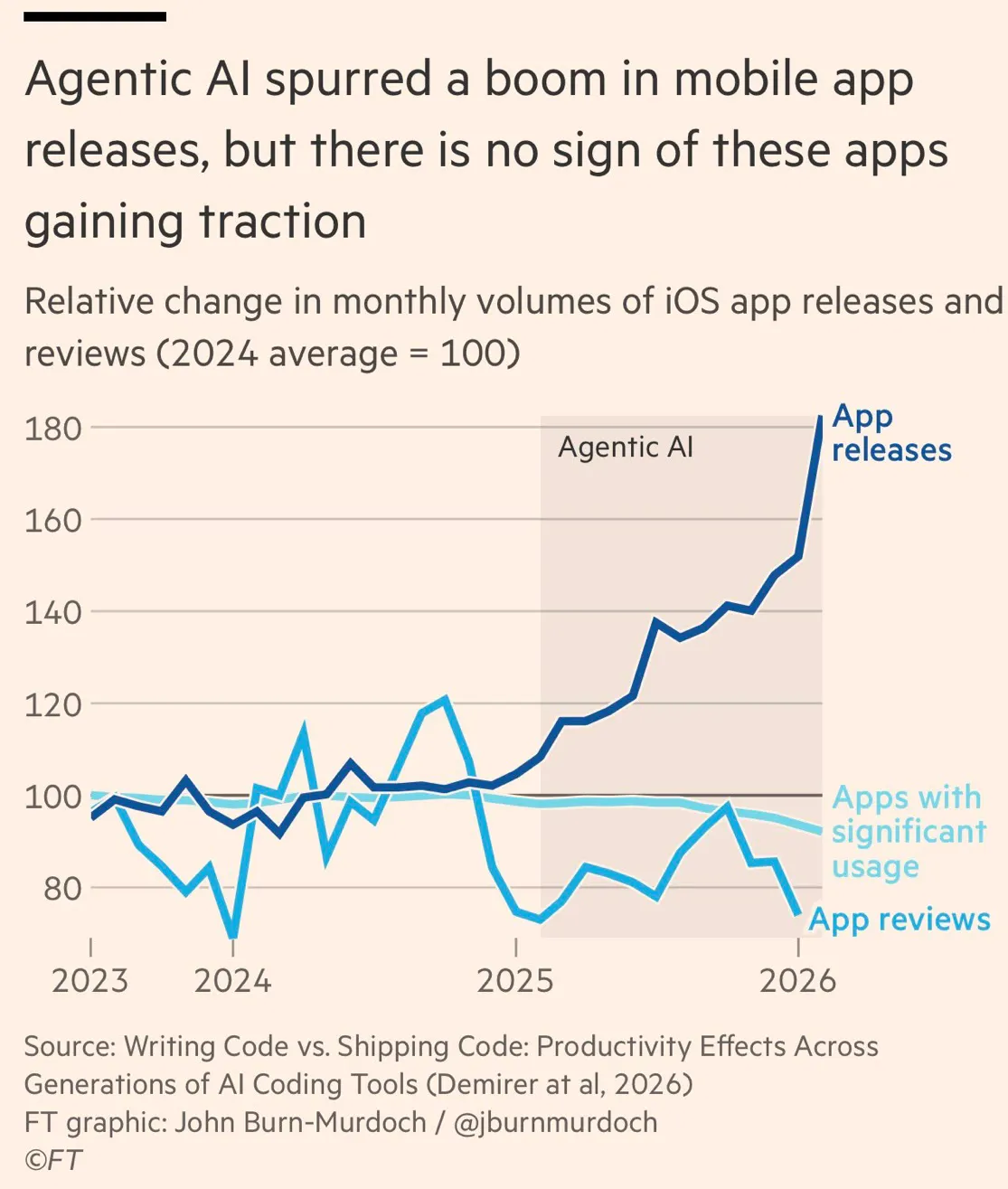
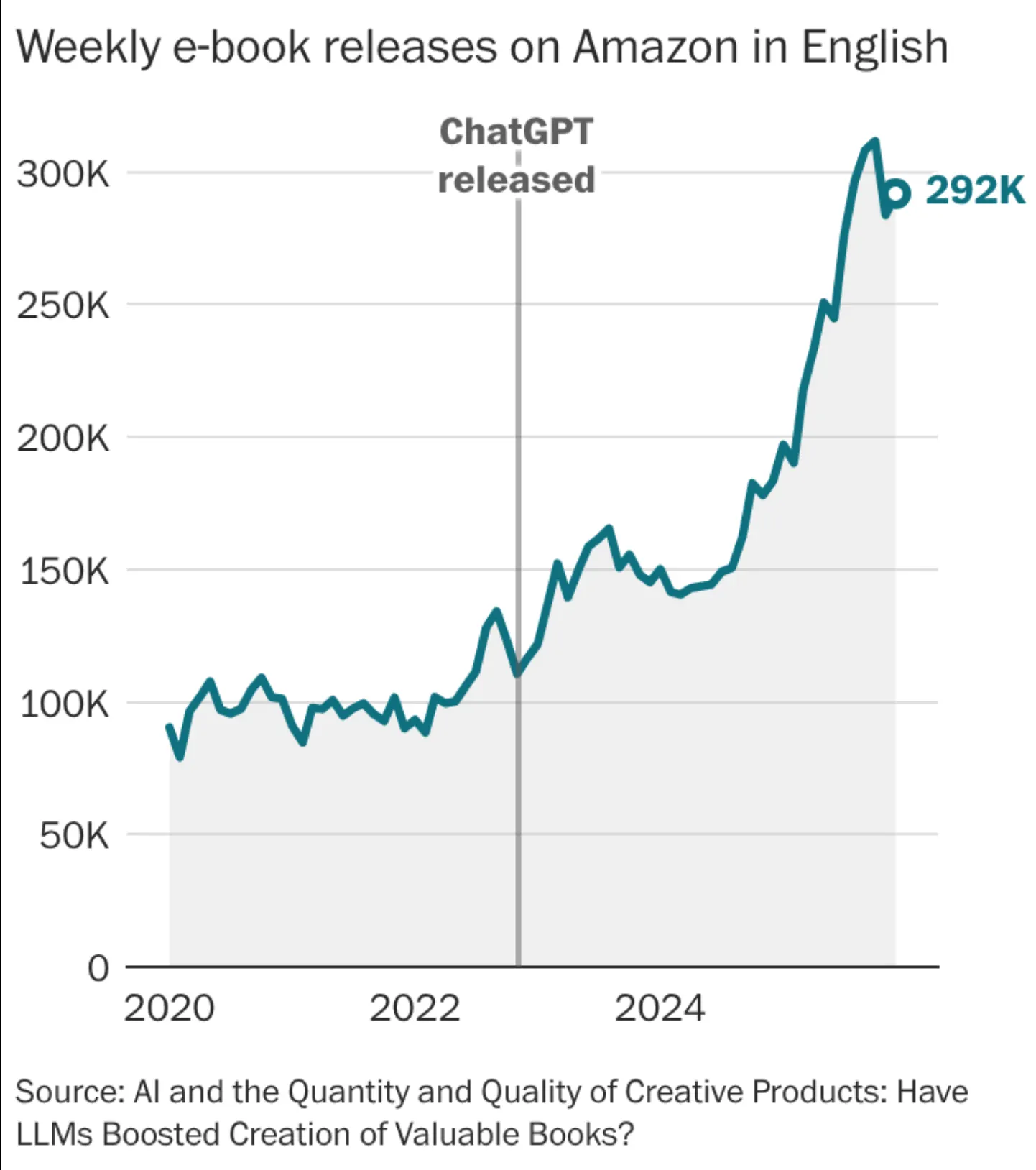
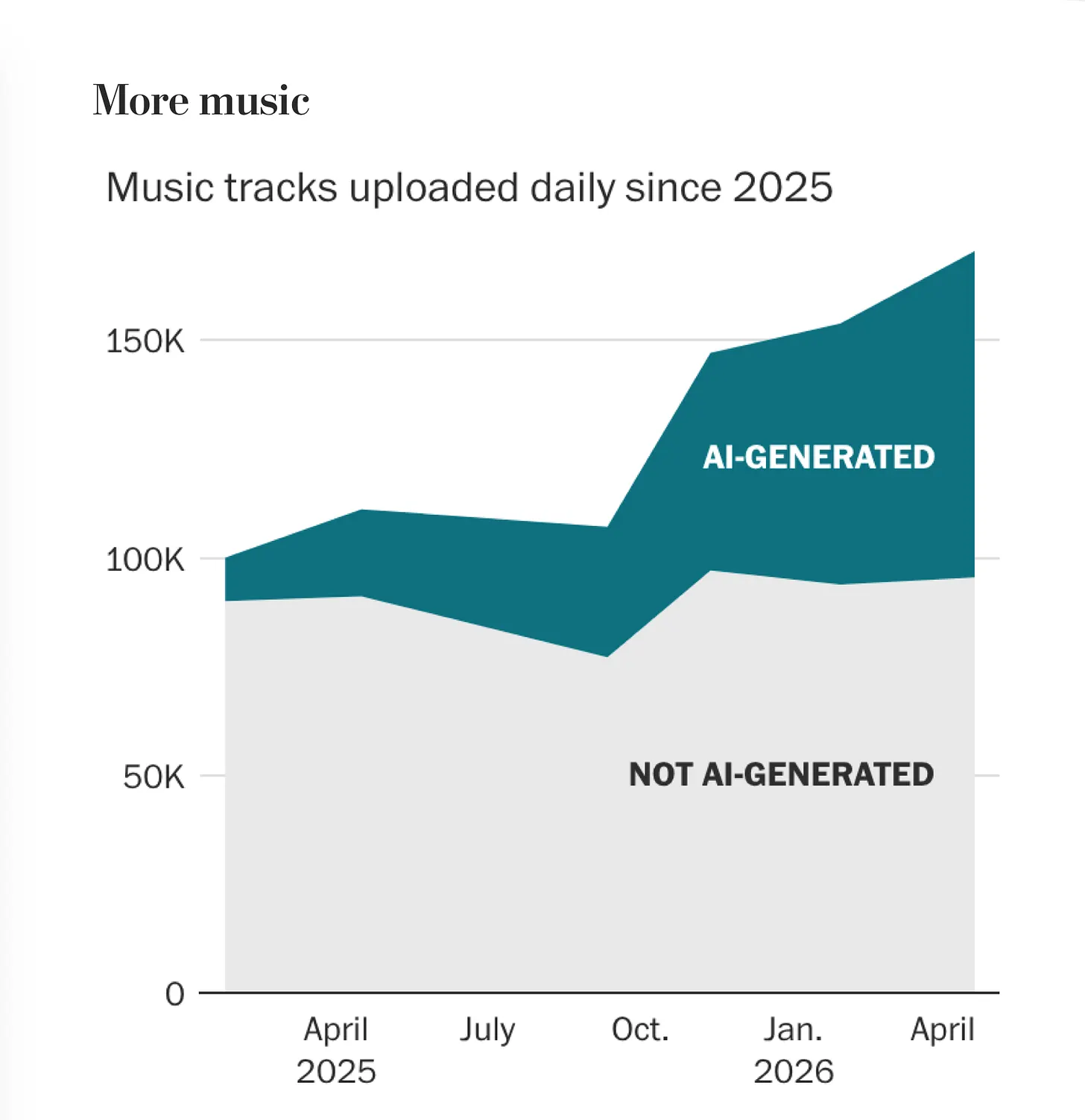
Gary Marcus has written an article named Slop, productivity and why the AI-fueled world is going nowhere mighty fast. Even the graphs say a lot.

graph2

graph3

If you need more fresh reasons to hate big AI companies, read Ed Zitron's article The Hater's Guide To The AI Bubble 3.0.

#EdZitron #ArtificialIntelligence #books #reading #Sweden #politics #sverigedemokraterna #kristdemokraterna #lobbying #music #MusicTips

ai

I want it to be better, but I also want to code. And I can't code with GitHub anymore. I'm sorry. After 18 years, I've got to go. I'd love to come back one day, but this will have to be predicated on real results and improvements, not words and promises.

Mitchell Hashimoto, Ghostty

- GitHub has been losing focus on being a good code management platform, and has instead been focused on pushing AI tooling in ways that I believe could be counterproductive, and a general hindrance to open source maintainership. - I was unable to make changes to our website repository due to (Git-LFS) activity limits which could be consumed by any public person/actor (and therefore were completely out of our control). - Codeberg, a non-profit community-led organization that’s providing a service using an open source solution, is much more aligned to the values that we want to support and portray in BookStack relative to Microsoft (GitHub’s owner).

Dan Brown, BookStack

The tangible one that tipped me to finally move: **I'm upset about GitHub Copilot.** It's fairly well known that Copilot can reproduce significant pieces of open-source code, stripped of their license. I'm moving to make it a **little bit harder** to have Copilot train on my code. This is perhaps a futile protest, but it's what I can do an individual. Writing about this is another aspect of what I can do.

Nicole Tietz-Sokolskaya

The short version: GitHub is owned by Microsoft. Microsoft uses code hosted on GitHub to train AI models, including GitHub Copilot. I did not consent to my code being used this way. Neither did millions of other developers whose work now powers a $19/month subscription service.

VintageTechie

Auf Wiedersehen, GitHub

Thomas Dohmke, former CEO of GitHub

#ArtificialIntelligence #microsoft #code #programmers #microsoft

book

There was recently an interesting article published in the New York Times: Where Have All the Book Reviews Gone?

It’s a grim business to linger on the numbers. In the 1960s, a good first novel might receive 90 individual newspaper reviews in America and England, the novelist Reynolds Price wrote in his memoir “Ardent Spirits.” By 2009, the year “Ardent Spirits” was issued, he reckoned the number was 20 at best. What would it be now? Two? Three?

A few magazines, of course, still run inspired book criticism; essential trees are still standing though the vast underbrush is gone. And the online discourse has its moments. But here’s another number: Not long ago, someone estimated that there were seven full-time book critics left in America. With The Post’s Book World gone, that number has dropped to five.

As a lonely and shellshocked survivor of this decimation, I find it hard not to envy the critics in London, which still has at least seven daily or Sunday papers in which a serious author might hope for a review. The literary debate over there is more like a boisterous dinner party and less like a Morse code dispatch between distant frigates passing in the night.

AI will, naturally, never replace humanity; even if Skynet happens and every single homo sapiens is physically murdered by machines, there's no replacement for people like Toni Morrison, Lester Bangs, Anthony Lane. From the article:

But here’s a catch with A.I. It’s easy to tell when a reference, or a comparison, or a sentence, doesn’t belong to a writer. Erudition and style aren’t forgeable for long; they still must be earned. As for A.I.’s sleek, space-efficient text, we’ve already grown accustomed to what that sounds like — the flat, consistent tone, the pert little summary bits, the repetitions, the impersonal and fluorescent-lit mood. Reading it, you feel you’ve been through the desert on a horse with no name.

At times, I've used Pangram, the AI detector service, to see how much some people are using AI. A former mountebank manager of mine used to answer team chat messages by physically scurrying away and then regurgitating something that AI handed to him without really knowing what he did. It reminds me of this video.

Is there a difference between people who use AI and people who are addicted to drugs? People who do drugs either want to feel something they can't feel without drugs or they want to feel nothing; people who use AI want to outsource thought and also outsource their ability to feel.

When doing drugs, there's a toll on yourself and other people.

When doing AI, the climate catastrophe marches on and you still have to reverse-engineer a pile of slop to be able to use any of what's usable.

Speaking for myself, the use of AI is often far worse than doing destructive drugs. I'm not kidding.

#ArtificialIntelligence #drugs #books #BookReviews

Elliott cover

I'm reading a coming biography about Elliott Smith, named Nobody Broke Your Heart: An Intimate Biography of Elliott Smith.

So far, I've only read the introduction. It bears the hallmarks of a great fucking book.

Twenty-three years after his death, Elliott still isn’t particularly well known, or well understood, but he is terribly loved. The task of understanding and preserving his legacy has become a collective project. There are YouTube accounts like I Remember Elliott; his old fan site Sweet Adeline, defiantly mired in Web 1.0; oral-history blogs like so flawed and drunk and perfect still; Smiling at Confusion, a site for posting guitar tabs, guidance on fingerings and chords. Fans share bootleg recordings and unreleased songs, reflections on his lyrics or entreaties for help understanding them, and they speculate darkly on his death. Below videos you’ll find hundreds of comments, people gushing over Elliott’s fingerpicking, arguing about whether he’s on something at this concert or just tired but clean, thanking him for accompanying them through depression or addiction, for making them feel less alone.

What is immediate, what is human, that is love.


Recently, a friend asked me to run some of their works through AI to see what it would create. Instantly it generated some seemingly worthwhile stuff but in actuality, AI is autocorrect on steroids. My friend isn't very knowledgeable around AI but they produce stuff that's, frankly, some of the best I've ever read and heard in their 'fields'.

Three recent articles about AI:

Ludwig Wittgenstein Ludwig Wittgenstein

Wittgenstein is one of my favourite modern philosophers. I highly recommend Ray Monk's beautiful Ludwig Wittgenstein: The Duty of Genius.

A recently-published article on large language models (LLMs) as they relate to Wittgenstein's views on language, semantics, and mathematics is very interesting indeed.

When Wittgenstein referred to the “beginning of the end of humanity,” he was not envisioning sci-fi cataclysms on the order of The Matrix or The Terminator or even Dr. Strangelove. He was referring to the end of humanity not primarily in terms of its biological survival, but in terms of what he called the “form of life” we inhabit. That form of life is threatened not so much by industrialization, nukes, robots, or AI agents as by a way of thinking that lowers human life to the plane of science and technology. Wittgenstein’s attempt to draw attention to that way of thinking—and dissuade us from it—is of the utmost importance in an era where the developing AI ideology threatens to further distort our understanding of how we use language and how we live.

A more in-depth excerpt from the wondrously and sharply written article:

The parts of the Investigations where Wittgenstein probes our concepts of thinking and understanding can help us escape the conceptual muddles that plague discussions and debates over AI and so-called “artificial general intelligence.”

“One of the great sources of philosophical bewilderment,” according to Wittgenstein, arises when a noun like “meaning” or “number” “makes us look for a thing that corresponds to it.” We assume that our language works principally by way of reference, so that where there is a noun there must be a thing it points to. But referring to objects is just one of language’s many functions or games. Instead of looking for the things behind our words, Wittgenstein proposes studying the grammar of the language game: the role words play—and don’t play—in these activities.

When we reflect on words like “meaning,” “thinking,” “understanding,” and “reasoning,” Wittgenstein argues, a certain picture immediately enters our heads: an internal process existing in the brain or mind that enables or somehow gives life to outwardly meaningful expressions. But, Wittgenstein asks, “What really comes before our mind when we understand a word?” Is it a kind of picture, so that I see an image of a pen in my mind’s eye when I hear the word “pen”? Do I then compare my inner picture to my experience of the outer world in order to determine whether it would be appropriate to use the word “pen”? Does some correspondence between this internal process and my expression “pen” somehow constitute the meaning?

The idea of meaning as an internal process seems unproblematic at first, even unavoidable, but, as Wittgenstein shows, it’s not clear what role such a process would actually be playing. He asks his reader, for example, to “say: ‘Yes, this pen is blunt. Oh well, it’ll do.’ First, with thought; then without thought; then just think the thought without the words.” Having conducted these absurd self-examinations, Wittgenstein asks us to reflect, “What did the thought, as it existed before its expression, consist in?”

His point is that our intuitive idea of meaning as an inner correlate of our outward expressions breaks down when it is taken as something like a scientific theory for what’s really going on when we use language. This failure shouldn’t surprise us. Our language did not evolve for scientific or metaphysical purposes, but just to help us make do and get along in the real world.

The picture of thought as an internal process accompanying our use of language is just that: a picture. It is unproblematic insofar as it arises in everyday language, as when I clarify a misunderstanding by telling you, after you’ve mistakenly handed me a red pen on the desk, “No, I meant that blue pen on the bookshelf.” But that sentence is not a claim about the state of my brain a moment ago; it could not be confirmed or disconfirmed by some kind of retroactive brain scan. It’s merely a way to advance a practical project that has gone off the rails. If it’s anywhere, meaning is in that project, not in my brain.

Of course, we might imagine that some industrious cognitive scientist equipped with the latest in brain-imaging technology might actually try to establish a causal connection between a particular brain state and the correct usage of the word “pen.” But even in that case, would it be correct to say that with a coordinated set of brain images we’ve in some sense located the meaning of the word “pen”? In what sense would the internal state that shows up on the scan explain the use or understanding of the word? Would it be analogous to the way the properties of an internal combustion engine can help explain the forward motion of a car?

This example shows how strange it is to use an examination of brain states instead of actual behavior as a criterion for ascribing understanding. If we’re looking for understanding and meaning, Wittgenstein thinks, we will find them in the various things we do with language and not in some internal process that accompanies our use of language.

This is just one of the strategies Wittgenstein uses to try to dissuade his readers from a mechanical, pseudoscientific understanding of language as it is embedded in human practices. The Investigations doesn’t attempt to refute this false understanding by formal, analytic argumentation the way a scientist or science-imitating philosopher might. Wittgenstein instead tries to show its limitations. His makeshift strategies—describing language games, imagining dialogues, conducting thought experiments, and drawing analogies—show how the scientific worldview has strayed from narrowly defined areas where it actually has purchase and started to distort our understanding of domains where it doesn’t belong.


It all reminds me of Noam Chomsky's discussion with Michel Gondry in the documentary Is the Man Who Is Tall Happy?. The documentary is packed with discussion on matters like universal grammar, but I remember Chomsky talking about how a small child can see a tall man who's happy; the child immediately knows that man is happy, and can draw parallels that allow the child to equally immediately know that not every man who is tall is happy, nor that every man is happy. The two-year-old Watumull/Roberts/Chomsky article The False Promise of ChatGPT says much about this.

It's not hard to know where happiness is found. To experience happiness is another thing, and AI won't help us there.

#ArtificialIntelligence #music #ElliottSmith #NoamChomsky #LudwigWittgenstein

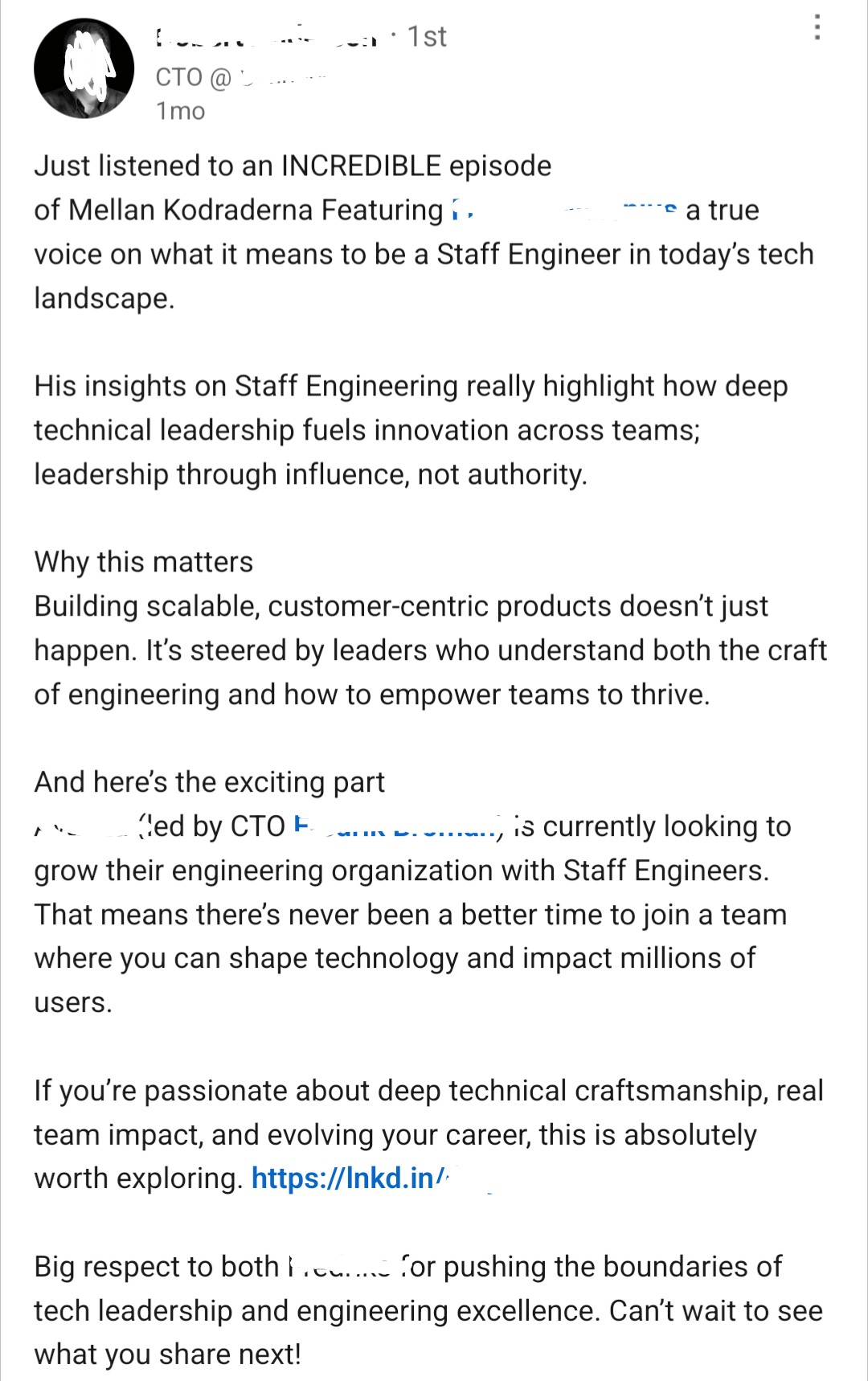
https://files.catbox.moe/6xs4km.png

This is a LinkedIn post by a charming person with whom I used to work. The person uses English as their first language.

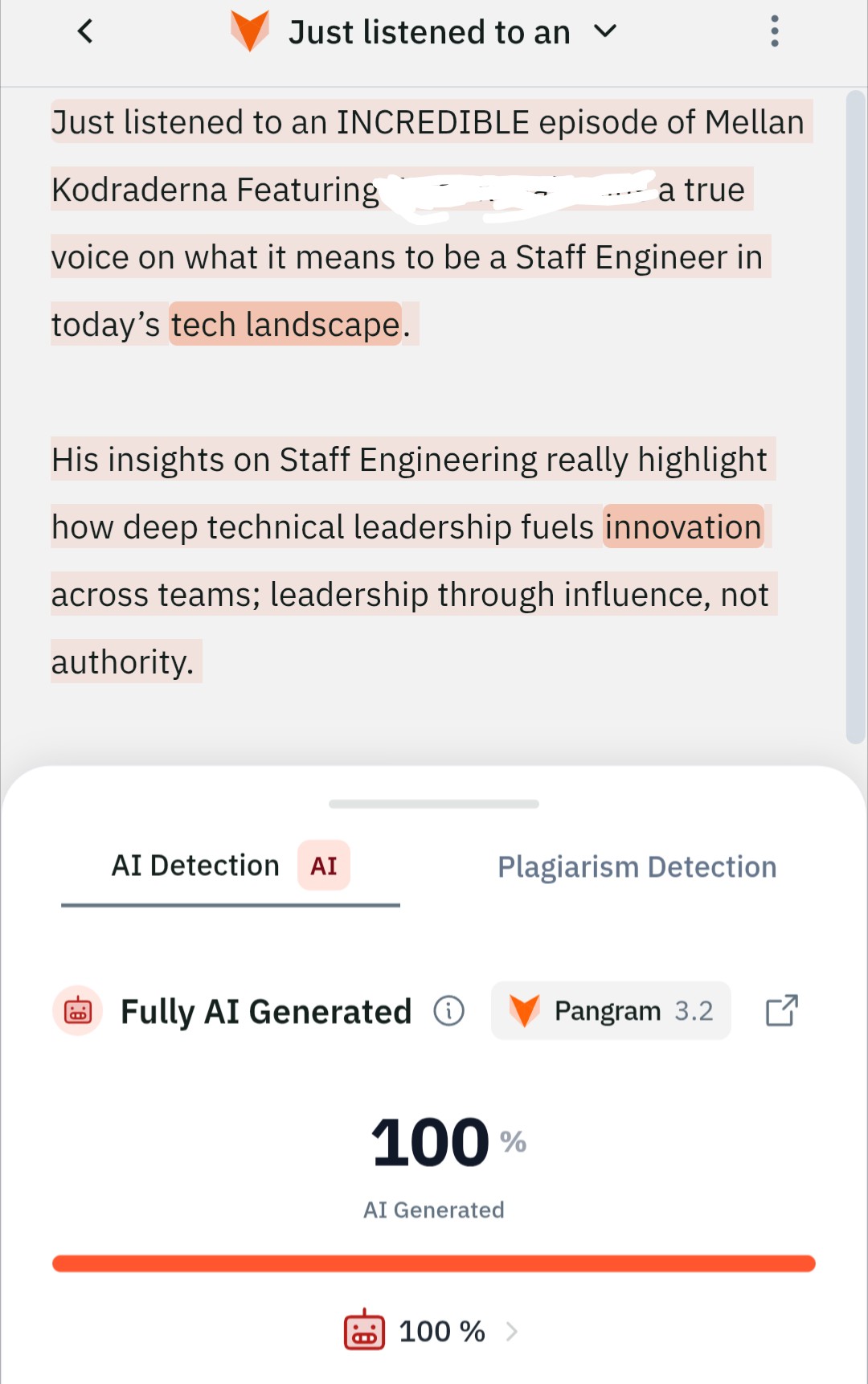
https://files.catbox.moe/bnj21f.png

This is a Pangram analysis of the entire LinkedIn post: the entire post is most likely generated by AI.

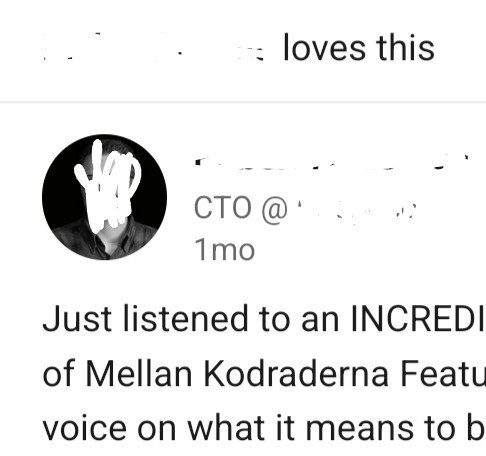
https://files.catbox.moe/vlcait.png

This is a reaction on the post. A person whom I respect claims to love the post.

What does the post say about the human who published the post? About the one who loved the post?

Every human makes mistakes. However, using AI turns off thought, often and notably critical thought. A six-month-old human innately reflects and learns; AI is just autocorrect on steroids, built on top of a fraction of the data that passes through an average human during a day.

The more humans use a sycophantic bullshit generator, the more they succumb to its allure. This is natural in bullshit.

Amazon now mandate AI-generated code as used by junior and mid-level programmers to be reviewed before it crashes their own systems.

Microsoft own LinkedIn. The Microsoft CEO claims to only use AI chatbots instead of reading email, which should result in getting fired.

Alas, here we are. AI has its uses, but is rarely worth it, mainly because a single AI interaction takes a monumental toll on the climate and often results in erroneous results.

If people would ask strangers on the street about certain things, they might get wrong answers. Would those people be sycophants and liars? Maybe, but it's not likely that they would make the repetitive and idiot-like 'mistakes' that are made by popular AI chatbots that are trained on mainly stolen data.

Would you befriend AI?

#ArtificialIntelligence

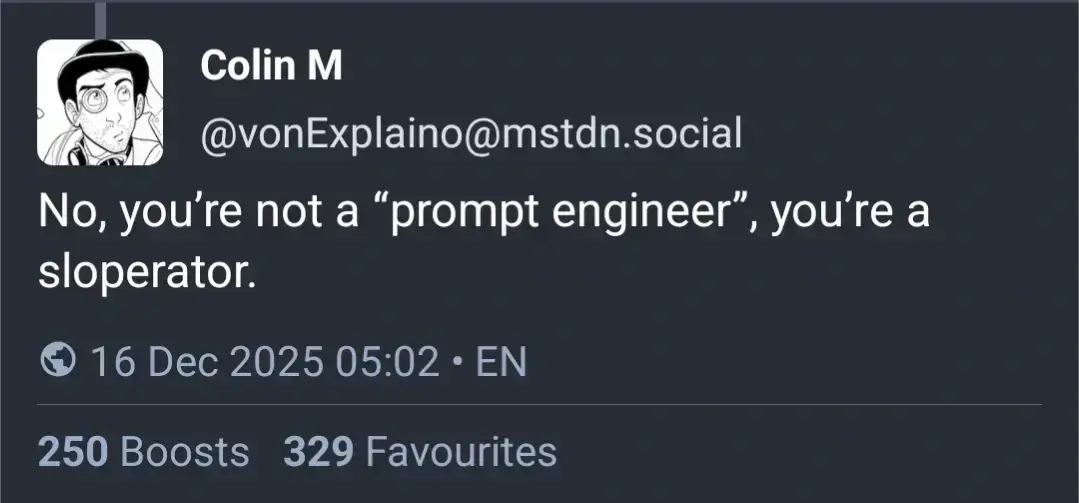
Sloperator

Merriam-Webster's word of the year in 2025 is 'slop'. One definition:

digital content of low quality that is produced usually in quantity by means of artificial intelligence

I think it's safe to say nobody sees AI-generated content as good, at least not from a high level. To constantly need to nanny what's basically autocorrect on steroids is a horrific user experience. Also, because AI is built on stolen copy, doesn't produce profits, and rapidly accelerates the climate catastrophe...what's there to like? Badly composed images? Computer code that imposes enormous security risks and isn't really built for maintenance?

AI doesn't even produce consistent results. Consistency is something we expect from AI to be used on a professional level, yet that's impossible to achieve.

Read this article on what AI can and can't do.

Don't be a sloperator.

If anything, AI should be used to replace the bullshitting managers who claim to love AI. Oh, bullshit:

I keep a garden page about bullshit.

#ArtificialIntelligence