Niklas's thoughts

Music and other stuff

Stop. Listen.

Tirakat is a very funky album. From the album description:

Tirakat brings together Jakarta-based trio Ali and Lebanese composer and multi-instrumentalist Charif Megarbane in a collaboration shaped by long-standing cultural exchange between Indonesia and the Arab world. Ali’s blend of 1970s Indonesian psychedelic funk, Melayu traditions, disco grooves and Arab melodic forms meets Charif’s long-running exploration of cross-regional sound, rooted in a shared musical vocabulary rather than genre.

Bar the hardcore rock and hip-hop, this is how Beastie Boys could have sounded if they'd grown up in Jakarta and Lebanon instead of the USA.

This is inventive, extremely groovy, and romantic. Strings mingling with fuzzed guitars and beats that would make any hip-hop producer salivate? Just check out the track 'Pejokan Funk'. You want a hazy, arpeggio-riddled harpsichord dream track set to the oboe and sitar? Try 'SILK END'.

Don't sleep on this. Buy or stream it via this page.

#music #funk #groovy #soul #HabibiFunk

I've looked for a band to make me stop wishing Alvvays would release a new album like Blue Rev. That won't happen but having said that, Brink, the new album by Girl Scout, is very good.

There are many guitar-based melodies and the singer is nearly as good as the lead singer in Alvvays. Differ'nt strokes, y'all.

I'm such a sucker for good guitar-based music.

#music

https://files.catbox.moe/6xs4km.png

This is a LinkedIn post by a charming person with whom I used to work. The person uses English as their first language.

https://files.catbox.moe/bnj21f.png

This is a Pangram analysis of the entire LinkedIn post: the entire post is most likely generated by AI.

https://files.catbox.moe/vlcait.png

This is a reaction on the post. A person whom I respect claims to love the post.

What does the post say about the human who published the post? About the one who loved the post?

Every human makes mistakes. However, using AI turns off thought, often and notably critical thought. A six-month-old human innately reflects and learns; AI is just autocorrect on steroids, built on top of a fraction of the data that passes through an average human during a day.

The more humans use a sycophantic bullshit generator, the more they succumb to its allure. This is natural in bullshit.

Amazon now mandate AI-generated code as used by junior and mid-level programmers to be reviewed before it crashes their own systems.

Microsoft own LinkedIn. The Microsoft CEO claims to only use AI chatbots instead of reading email, which should result in getting fired.

Alas, here we are. AI has its uses, but is rarely worth it, mainly because a single AI interaction takes a monumental toll on the climate and often results in erroneous results.

If people would ask strangers on the street about certain things, they might get wrong answers. Would those people be sycophants and liars? Maybe, but it's not likely that they would make the repetitive and idiot-like 'mistakes' that are made by popular AI chatbots that are trained on mainly stolen data.

Would you befriend AI?

#ArtificialIntelligence

Just as Miley Cyrus could potentially be seen as 'bad' for covering a Cocteau Twins song, that is, to me, not even interesting to consider.

First, it's obvious that Miley loves the track. Second, I love her talk before and during the song; reverence is overrated. Third, the result is a gateway into the universe that is Cocteau Twins, and that, friends, is never bad.

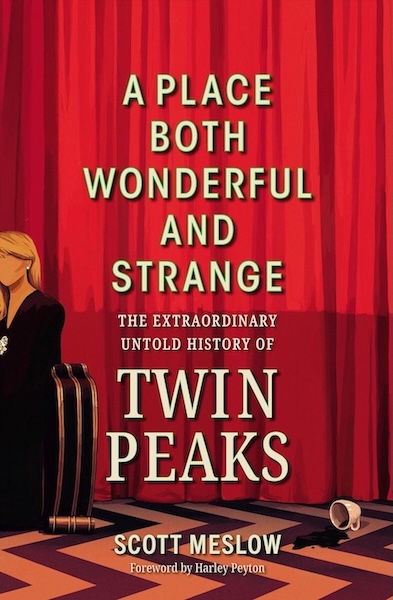
This morning I read a well-conceived and -written book excerpt about the villain as concept. The book is Dream Facades: The Cruel Architecture of Reality TV by Jack Balderrama Morley. The book excerpt is found in this LitHub post.

The excerpt starts by focusing on Heidi Montag, The Villain of fantastic TV series The Hills.

A villain is just Heidi Montag wanting to make money for being famous. She just wants to follow her own path. Her “flaws” are on the outside, and she’ll enumerate the ways in which she’s tried to fix them, not squirrel them away so they can do damage in the dark. Villains may not be perfect, but at least you know who they are.

Reality TV, despite all the moral hand-wringing and critical disdain surrounding it, has never really been so different from other kinds of American media. It fits neatly into the broader cultural landscape of torn social ties, disconnection and alienation, and the hunger for a life that feels more real and the belief that video somehow offers a cure.

The genre may actually be most similar to the televisual medium that sits on the opposite end of the respectability spectrum, vaunted as so critical to maintaining the American republic: the news.

Another excerpt:

Heidi is a storyteller. She conceives her lines and delivers them in the moment, reacting to the scripts of the people around her, such as the newscaster interviewing her.

Many have followed in Heidi’s steps—Christine Quinn, Donald Trump, the Kardashians—and they’ve been so successful because America had been heading in Heidi’s direction since its founding. She is the self- made soul, speaking the story of herself into existence, redefining the wilderness as she sees it, finding love and a home in the process.

This is the strange trajectory that hybrid homes get pushed along by the digital forces running through them. Video’s paranoia about the story of reality now runs through the places we live.

The Real World, Selling Sunset, the Kardashians shows, and The Bachelor show how homes are freighted with feelings, but they don’t explain why homes are just so foundational to the American psyche. Our homes, our selves. It might be a universal association, but Americans and their twisted economic system take it a step further. When it comes to your home, you have to own it, as any Real Housewife will tell you. It’s on their show that we start to see how deep the paranoia about reality runs.

The book seems to be extraordinarily well written. I will buy it.

#books #reality #TV #music

Galileo

I do not like easy jazz. I don't know what is happening. Maybe I'm getting softer in my older fucking age or it's just that I'm appreciating a recording where you can hear playing not in the modern-classical jazz sense—i.e. fucking boring twiddling à la dreadfully-virtuosic-performer style—but instead how the piano hammers move inside a piano.

The EP Galileo by Luke Howard is a lovely EP where old-schooly piano playing meets a neo-classical sensibility.

I feel weirded out by myself: I actually like the 1940s-ish type of playing, how it twines with steady and quieter background chord thrums, while the Howard's right hand louder plays melodies and curlicues.

Fuck me, this is nice. I can't remember a single song name nor a single melody but I just like this shit. To me, this is a pleasant take on romantic piano playing in jazz. This is everything that the Downton Abbey scriptwriter should have wanted to do and failed to do. This is made with feeling and does not at all feel like it's written by AI, thank Bog. Get in.

#piano #music #jazz

Königsberg

The book has an intriguing intro:

Between 1835 and 1842, scandal tightened around two clergymen in the Baltic port city of Königsberg. It destroyed their reputations, drove them out of their jobs and into prison, and banished them from public life. Their legal exoneration of the most serious charges against them came too late to reverse the damage. I have been thinking about this small vortex of turbulence ever since I happened on the relevant files in the early 1990s. The campaign of denunciations and rumour that took down the Lutheran preachers Johann Ebel and Heinrich Diestel belongs to an age before the advent of paparazzi, radio, television and digital social media, but that is precisely what endows their story with fabular power. Resemblances to present-day persons and situations, though not intended, cannot be ruled out.

Ooh! Witchy start!

The book is #1 in LitHub's best-reviewed nonfiction list for this week.

#book #reading #quote

The Dwaele brothers, a.k.a. Soukwax, a.k.a. 2 Many DJs, have now released a 50-minute video from their February 2026 gig in Studio One in Abbey Road—yes, the room where Shirley Bassey recorded 'Goldfinger' in the world-famous recording studio—that shows why they're great DJs.

I really like the mix between feeling you're caught in a liminal space between being in the same room as the DJs and being in the surrounding areas, watching buspeople, empty room, and corridors, for example, here:

#music #soulwax #dj #dance

Theroux

I've recently seen 'Louis Theroux: Inside the Manosphere', the first documentary that Theroux has made for Netflix.

I wish the documentary were in-depth; even though it focused on Theroux's usual way of interviewing people—calmly asking questions, simply pointing out inconsistencies in people's stories—there's a lot of show-and-tell of manosphere influencers but little to show how and why they're wrong.

Don't get me wrong: these influencers are often wrong, always in how their xenophobia (real or manufactured for money) shows, for example, through sexism, islamophobia, antisemitism, and ludicrous conspiracy theories.

I mean, I think the documentary would have been better made if more time were spent on not just following the influencers or asking them slight questions but rather speaking with people who research and know how the manosphere influences not only their target audiences (young boys who become older boys with money and are allowed to vote) but the results of their behaviour on others.

This documentary scantily passed victims. I'd like to have heard interviews with women, especially those who did make it into the documentary.

Unfortunately, even though Theroux hits some good points, I think it's a mistake for this documentary to mostly just pass influencer content through the Netflix funnel rather than to analyse, question, research the field, and ultimately present a better documentary.

#video #sexism #islamophobia #homophobia #xenophobia #documentary

From Peter Ormerod's David Bowie and the Search for Life, Death and God:

While working on his new music, Bowie was also working on the realization of a lifetime's dream: a piece of musical theatre. His collaboration with Michael Cunningham had fizzled out, but Bowie persevered. He got in touch with Enda Walsh, an Irishman whose plays and musicals, including Disco Pigs, Penelope and Once, had by then received countless awards. The result of their efforts was arguably as significant as any of Bowie's other last works: put it together with the touring exhibition and you have a kind of multimedia autobiography.

Agape was still very much on Bowie's mind during his discussions with Walsh. “There was a lot of talk about the beauty of unconditional love,' Walsh recalled. Elsewhere, Walsh said, 'We looked a lot at stained-glass windows, how a story is told with a central image. How it's all broken and shattered.'

After the false start with Cunningham, Bowie's work with Walsh was showing potential. So in 2014 Bowie asked Ivo van Hove, one of the most decorated theatre directors in Europe, to help take it to the stage. From Bowie's earlier concept, two elements survived: Thomas Jerome Newton, his character from The Man Who Fell to Earth, and the poet Emma Lazarus, who was beginning to elide with the resurrected biblical figure. But details remained scarce. 'There should be a killer in it, there should be a girl in it,' was all he told van Hove.

Bowie, Walsh and van Hove met in New York in 2014, along with Corinne 'Coco' Schwab, Bowie's personal assistant and confidante since the mid-1970s. Bowie and Walsh read the script to van Hove, interspersed with songs played on CD. Van Hove thought something was missing, and told Bowie that he needed to write 'the one song in the beginning. We need to know who that guy is. And we need a song that establishes the character within three or four minutes.' So Bowie wrote the song and recorded a demo. The song was called 'Lazarus'.

'It sounded like an immediate Bowie classic, even in a demo version,' said van Hove. 'And I knew: now we have a show. Now we know who the guy is, what he's longing for, what his issue is. It's mysterious at the same time. It's everything.'

Stream the album via this page.

My Bloody Valentine's song 'only tomorrow' is great example of what the band could and can create.

Kevin Shields has a billion guitar pedals and ways to make effects; still, this song is basically something that a young person with a few computer-based effects could make. Shield's great knack at creating music is what separates him from the chaff.

It takes a fucking aeon of trial-and-error to come up with this fucking sound, let me tell you, in case it's not already obvious to you. To mix a simple guitar that's not particularly fuzzed with another guitar that sounds like a Big Muff pedal has been blasted through overdrive... And pairing those two elements with what seems to me to be pink and white noise, and then adding Bilinda Butcher's processed vocals...

The arrangement and full-on playing could easily have become ham-fisted but here we are: this is fucking grace.

From the first verses to the bridge at 01:20, to then twelve bars of overlays: softly toned-down guitar feedback and then back to the verse?

mbv live in 2025.

Fuck me. This is some really thought-through music that still sounds like it's made by renegades and young punks. This is some proof that the next MBV album will fucking rock the world, if it ever comes. Only Kevin Shields would know, I guess.

03:29: the start of a solo-guitar tremolo melody starts. I can't believe how more guitars are added just a bit after the four-minute mark, and the song grows even more. Is that a Leslie speaker? I don't know. I've heard this song and it's taken me to other galaxies so many times that I can now afford to chill out and just go somewhere else in my mind with this. Repetition, minimalism, and a simple wall of guitar-based music – the drums can't be ignored, because unlike most of the guitars, they and the simple one guitar that follows the verse are the only instruments that seem to contain a bit of treble.

It's all mixed very extraordinarily. If you know anything about Kevin Shields's ways around music, you know he cares about everything in how music is presented.

At the end of the day, the song is a fucking tune. Regardless of how well-produced, engineered, mixed, and presented a track is, if it ain't a tune, people won't like it. This is a track that one could play on one acoustic guitar and people would get off on it.

#MyBloodyValentine #music #MusicTips #shoegaze #feedback #composition #sound #tone #guitar